
Oral cancer, also known as mouth cancer, is a common form of head and neck cancer that develops in the tissues of the oral cavity. It most frequently affects the tongue but may also involve the gums, inner cheeks, lips, hard palate, floor of the mouth, or the area behind the wisdom teeth. Most oral cancers are diagnosed as squamous cell carcinoma.
Early symptoms of oral cancer include a non-healing mouth ulcer, red or white patches, a lump inside the mouth, and pain or difficulty while swallowing. Not all mouth tumors are cancerous, but early diagnosis plays a vital role in successful treatment.
Oral cancer treatment primarily involves surgery to remove the tumor with clear margins. Depending on the stage and spread, treatment may also include radiation therapy or chemoradiation. Surgical options such as glossectomy, mandibulectomy, maxillectomy, and neck dissection help control disease spread and restore oral function and appearance.

Tongue cancer is a common type of oral and head & neck cancer that develops in the cells of the tongue. It most often arises from the squamous cells lining the surface of the tongue. Tongue cancer may affect the front two-thirds of the tongue (oral tongue) or the base of the tongue, which is part of the oropharynx.
Early signs of tongue cancer include a persistent ulcer, red or white patches, a lump on the tongue, pain while speaking or swallowing, and restricted tongue movement. Some tongue lesions may be benign or precancerous, making early evaluation and biopsy essential.
Tongue cancer treatment usually involves surgical removal of the tumor with adequate safety margins. Depending on the stage, surgery may be followed by radiation therapy or chemoradiation for complete cancer control. Advanced surgical procedures such as partial or total glossectomy and neck dissection may be required if lymph nodes are involved. Reconstructive surgery helps restore speech, swallowing, and appearance, improving overall quality of life.
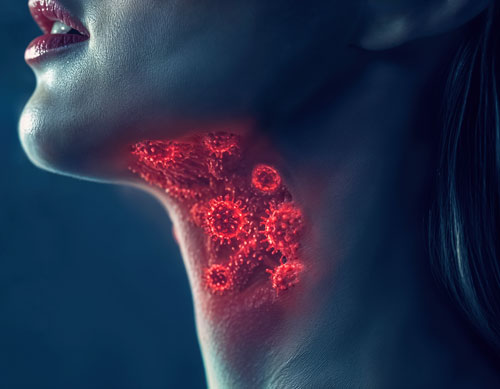
Throat cancer, medically referred to as pharyngeal cancer, affects the tissues of the pharynx, which connects the nose and mouth to the windpipe and food pipe. This cancer may develop in the nasopharynx, oropharynx, or hypopharynx and is classified under head and neck cancers. Most throat cancers arise from squamous cells lining the throat.
Common symptoms include persistent sore throat, difficulty in swallowing, voice changes, a sensation of something stuck in the throat, ear pain, or a neck swelling. These symptoms should not be ignored, as early detection significantly improves treatment outcomes.
Surgery plays a key role in throat cancer management, with the goal of removing the tumor while preserving speech and swallowing functions. Depending on the tumor’s size and location, surgery may be performed through the mouth or neck, sometimes using advanced minimally invasive techniques. In cases of lymph node involvement, neck dissection may be required. Surgery is often combined with radiation therapy or chemoradiation to ensure complete disease control and long-term recovery.

Nasal and sinus cancers are rare head and neck cancers that develop in the nasal cavity or the paranasal sinuses surrounding the nose. These cancers often originate from the lining of the nasal passages and sinus cavities and are most commonly diagnosed as squamous cell carcinoma.
Symptoms may include persistent nasal blockage, nosebleeds, facial pain or swelling, reduced sense of smell, frequent sinus infections, or eye-related symptoms such as watering or double vision. Because early signs often mimic sinusitis, delayed diagnosis is common.
Surgical treatment is a cornerstone of nasal and sinus cancer management. The primary goal is complete removal of the tumor while protecting nearby structures such as the eyes, brain, and facial nerves. Depending on the tumor’s extent, surgery may be performed using endoscopic (minimally invasive) techniques or open surgical approaches. Surgery is frequently followed by radiation therapy or chemoradiation to reduce recurrence risk. Advanced reconstructive procedures help restore facial function, breathing, and appearance, supporting better quality of life.
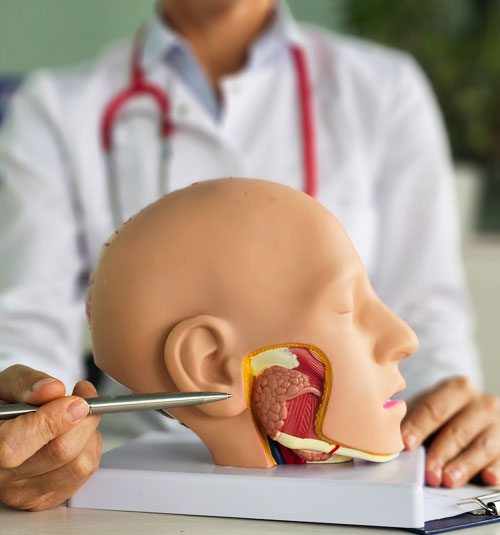
Salivary gland tumors are uncommon head and neck conditions that develop in the glands responsible for saliva production. These tumors may be benign or malignant and most frequently arise in the parotid gland, located near the ears, followed by the submandibular and sublingual glands. Prior exposure to radiation can increase the risk of developing salivary gland cancer.
Typical symptoms include a painless or painful swelling near the jaw, ear, or mouth, facial numbness or weakness, difficulty in swallowing, and restricted mouth opening. Since benign tumors can gradually transform into cancer, early medical evaluation is essential.
Treatment of salivary gland tumors usually involves surgery to remove the affected gland or tumor while preserving facial nerve function. In selected cases, minimally invasive techniques such as sialendoscopy may be used to manage duct-related tumors and improve recovery. Depending on tumor type and spread, surgery may be combined with radiation therapy or other treatments to ensure complete disease control and long-term oral health.
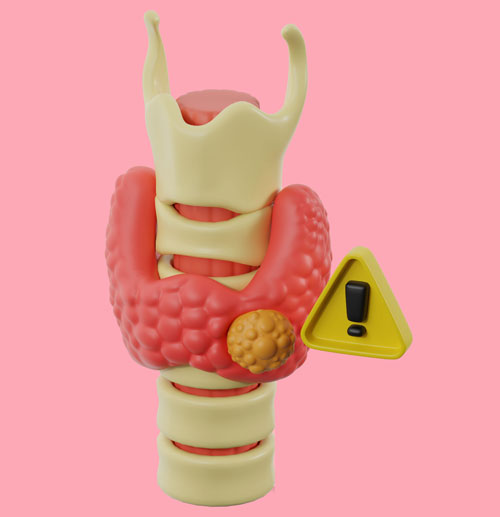
Thyroid cancer develops in the thyroid gland, a butterfly-shaped organ located at the front of the neck that regulates metabolism, energy levels, and hormone balance. While many thyroid nodules are non-cancerous, certain types can become malignant and require timely surgical management.
Common signs include a visible or palpable neck swelling, hoarseness of voice, difficulty swallowing, breathing discomfort, or enlarged neck lymph nodes. Thyroid cancer is often slow-growing, but early diagnosis significantly improves cure rates.
Surgery is the primary and most effective treatment for thyroid cancer. Depending on the cancer type and stage, the procedure may involve partial or complete removal of the thyroid gland (thyroidectomy). In cases where lymph nodes are affected, selective neck dissection may also be performed. Post-surgery, patients may require radioactive iodine therapy or hormone replacement to ensure complete cancer control and maintain normal body functions. With expert surgical care, most patients achieve excellent long-term outcomes.

Neck lymph node dissection is a specialized surgical procedure performed to remove lymph nodes that may contain cancer cells. It is commonly recommended in head and neck cancers when there is a risk or evidence of cancer spread to the lymphatic system.
Lymph nodes in the neck act as filters for infections and cancer cells. When cancer spreads beyond the primary tumor site, these nodes can become involved even before symptoms appear. Imaging studies and biopsy findings help determine the need for this surgery.
The goal of neck dissection is to achieve complete disease clearance while preserving vital structuressuch as nerves, blood vessels, and muscles. Depending on cancer extent, the procedure may be selective, modified radical, or comprehensive. Neck lymph node dissection is often combined with primary tumor surgery and may be followed by radiation therapy or chemoradiation to reduce recurrence risk. With modern surgical techniques, functional outcomes and quality of life are well preserved.
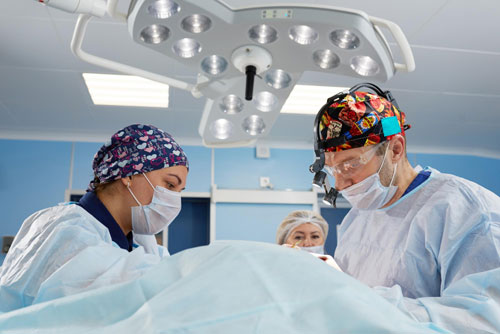
Reconstructive surgery after cancer plays a vital role in restoring both appearance and essential functions following cancer removal. In head and neck cancers, surgery may affect areas responsible for speech, swallowing, breathing, and facial expression. Reconstructive surgery is performed to rebuild these structures and improve the patient’s quality of life.
The procedure is usually planned alongside cancer surgery to ensure optimal functional and cosmetic outcomes. Advanced techniques such as microvascular free flap reconstruction, local flaps, and tissue grafts are used to replace removed tissues. Skin, muscle, bone, or soft tissue may be taken from another part of the body and carefully reconstructed at the affected site.
This surgery helps restore normal speech, swallowing, chewing, and facial symmetry. It also supports psychological recovery by improving self-confidence and social interaction. Each reconstruction plan is personalized based on tumor location, extent of surgery, and the patient’s overall health.
A multidisciplinary approach involving surgical oncology, reconstructive surgery, speech therapy, and rehabilitation ensures comprehensive recovery. With modern surgical precision and expertise, reconstructive surgery after cancer offers patients the chance to regain function, form, and a better quality of life.

Recurrent head and neck cancer refer to the return of cancer after initial treatment such as surgery, radiation, or chemotherapy. Managing recurrent disease requires careful evaluation, advanced planning, and highly specialized expertise. Each recurrence is unique and depends on the original cancer type, location, previous treatments, and overall patient health.
The first step in management involves detailed clinical assessment, imaging studies, and biopsy to confirm recurrence and determine its extent. Treatment strategies may include revision surgery, targeted therapy, immunotherapy, chemotherapy, or re-irradiation, either alone or in combination. Salvage surgery is often considered when the recurrent tumor is localized and operable.
Advanced surgical techniques help achieve tumor control while preserving vital functions such as speech, swallowing, and breathing. Reconstruction may be performed simultaneously to restore form and function. Precision-based decision-making is essential, especially in previously treated tissues.
A multidisciplinary approach involving surgical oncology, medical oncology, radiation oncology, and rehabilitation specialists ensures comprehensive care. The goal of recurrent head and neck cancer management is not only disease control but also maintaining quality of life, function, and long-term survival through personalized treatment planning.

Cancer surgery often requires removal of affected tissues to ensure complete disease clearance. In many head and neck cancers, this may involve structures important for speech, swallowing, breathing, and facial appearance. Reconstruction plays a crucial role in restoring both function and cosmetic balance after tumor removal.
Advanced techniques such as local flaps and microvascular free flap reconstruction allow surgeons to rebuild complex defects using the patient’s own tissue. The goal is not only to remove the cancer safely but also to preserve quality of life by maintaining speech, swallowing, and facial symmetry.
With careful planning and a multidisciplinary approach, cancer reconstruction helps patients return to normal daily activities with confidence and improved long-term outcomes.

Larynx laser surgery is a minimally invasive procedure used to treat various conditions affecting the voice box, including early-stage laryngeal cancers, vocal cord lesions, and precancerous growths. This advanced technique uses a precise laser beam to remove abnormal tissue while preserving healthy surrounding structures.
One of the major advantages of laser surgery is reduced bleeding, minimal pain, and faster recovery compared to traditional open procedures. In many cases, it helps preserve voice quality and normal swallowing function.
Early diagnosis and timely intervention are essential for the best outcomes, especially in cases of early laryngeal cancer.
Dr. Ravi, an experienced ENT and Head & Neck Surgeon, offers expert evaluation and advanced larynx laser surgeries using modern technology and a patient-focused approach. Each treatment plan is customized to ensure effective disease control with optimal functional results.
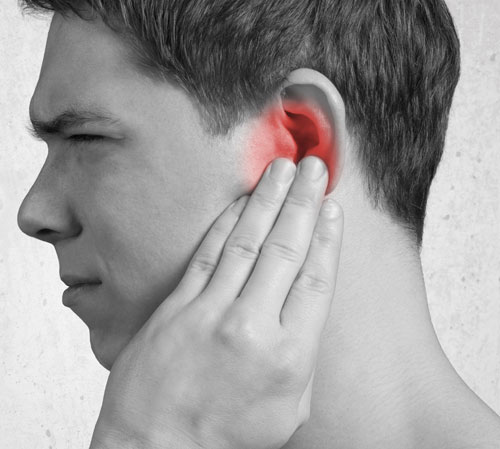
Ear cancer is a rare condition that can affect the outer ear, ear canal, middle ear, or surrounding structures. It usually begins in the skin cells of the ear but can also involve deeper tissues if not detected early. Because symptoms may resemble common ear infections, timely evaluation is very important.
Common signs include a persistent ear lump or sore, bleeding or discharge, hearing loss, ear pain, or facial weakness in advanced cases. Any non-healing ulcer or unusual growth around the ear should be examined promptly.
Treatment depends on the stage and location of the cancer and may include surgery, radiation therapy, or a combination approach.
Dr. Ravi, an experienced ENT and Head & Neck Surgeon, provides comprehensive evaluation and advanced treatment for ear cancer with a focus on complete tumor removal while preserving hearing and facial function whenever possible.

Parathyroid cancer is a rare malignancy that develops in one of the four small parathyroid glands located behind the thyroid gland. These glands regulate calcium levels in the body through parathyroid hormone (PTH).
In most cases, the tumor produces excess PTH, leading to high calcium levels (hypercalcemia). Symptoms may include frequent urination, excessive thirst, nausea, constipation, fatigue, muscle weakness, memory issues, or a lump in the neck with voice changes.
The exact cause is unknown, but certain genetic conditions (such as MEN1 and familial hyperparathyroidism) and prior radiation exposure to the neck may increase risk.
Diagnosis involves blood tests for calcium and PTH levels along with imaging studies like ultrasound, CT scan, or MRI.
Surgery to remove the affected gland (en-bloc resection) is the primary and most effective treatment. In advanced cases, additional procedures may be required to remove surrounding or metastatic disease.

 +91-9811-911-675
 Email Us